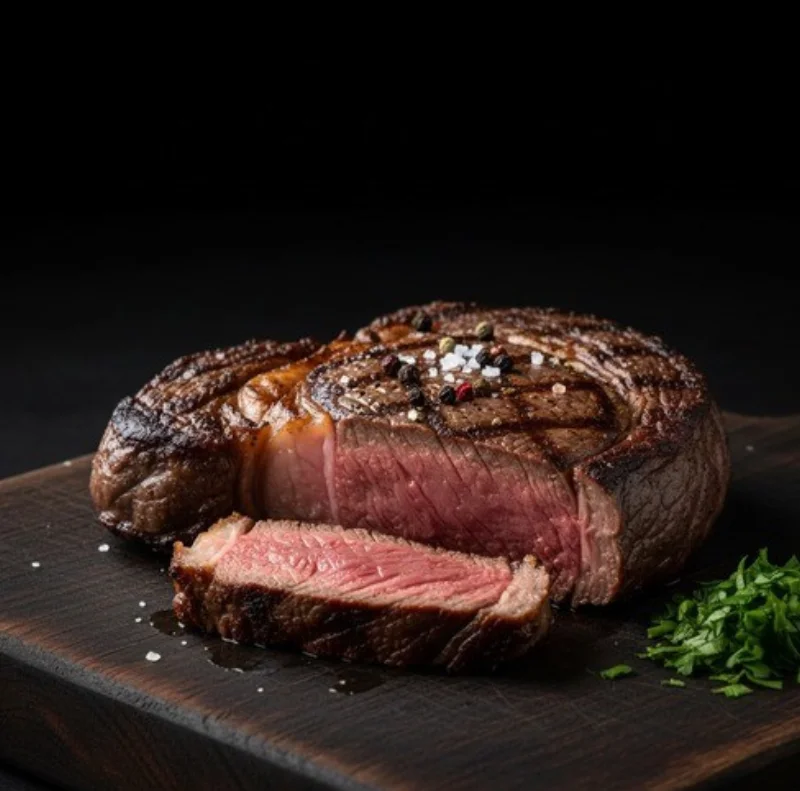
Composition is the foundation of compelling food photography. While lighting and styling matter, it's composition that guides the viewer's eye, creates visual interest, and transforms a simple dish into an irresistible image. Understanding these principles will elevate your food photography from amateur snapshots to professional-quality images.
In this comprehensive guide, we'll explore the essential composition techniques used by professional food photographers to create stunning, scroll-stopping images.
The Rule of Thirds
The rule of thirds is the most fundamental composition technique in photography. Imagine dividing your frame into a 3x3 grid with two horizontal and two vertical lines. The points where these lines intersect are called "power points"—these are the most visually compelling places to position your main subject.
Instead of centering your dish, place it along one of the grid lines or at an intersection point. This creates dynamic tension and visual interest that naturally draws the viewer's eye through the image.
Applying the Rule of Thirds to Food
- Single dish: Position the main dish at one of the four intersection points, leaving space for props or negative space on the opposite side.
- Multiple items: Arrange dishes along the grid lines, creating a visual flow from one element to another.
- Hero element: If your dish has a standout feature (like a perfectly melted cheese pull), place it at a power point.
Camera Angles for Food Photography
Choosing the right angle is crucial for showcasing your dish's best features. Different angles work better for different types of food.
Overhead (90°) - The Flat Lay
Shot directly from above, this angle is perfect for:
- Flat dishes like pizzas, salads, and grain bowls
- Table scenes with multiple dishes
- Foods with beautiful toppings or patterns
- Dishes where height isn't the main feature
45-Degree Angle - The Classic
The most versatile and natural viewing angle, mimicking how we actually look at food on a table:
- Shows both the top and side of the dish
- Works for almost any type of food
- Creates natural depth and dimension
- Ideal for plated restaurant dishes
Straight-On (0°) - Eye Level
Shot at the same level as the food, this dramatic angle works best for:
- Tall items: stacked pancakes, burgers, layer cakes
- Drinks and cocktails
- Foods with interesting layers visible from the side
- Creating an intimate, inviting perspective
Leading Lines
Leading lines guide the viewer's eye through your image toward the main subject. In food photography, these can be created by:
- Utensils: A fork or spoon pointing toward the dish
- Napkin edges: Folded linens creating diagonal lines
- Table edges: The edge of a cutting board or placemat
- Ingredient arrangements: Scattered herbs or spices forming a path to the hero dish
- Drizzles and sauces: A line of sauce or oil leading to the main subject
Negative Space
Negative space is the empty area around your subject. Far from being wasted space, it serves crucial purposes:
- Focus: Draws attention to your main subject by eliminating distractions
- Breathing room: Prevents the image from feeling cluttered or overwhelming
- Commercial use: Provides space for text overlay in marketing materials
- Sophistication: Creates a clean, minimalist aesthetic often associated with fine dining
Don't be afraid of empty space—it's a powerful compositional tool that elevates the perceived quality of your food photography.
The Golden Ratio and Spiral
The golden ratio (approximately 1:1.618) creates naturally pleasing proportions. The golden spiral, derived from this ratio, provides a guide for arranging elements in a way that feels organic and balanced.
In food photography, use the golden spiral to:
- Position your main dish at the spiral's focal point
- Arrange supporting elements along the spiral's curve
- Create a natural flow that guides the eye through the entire composition
Symmetry vs. Asymmetry
Symmetrical Composition
Symmetry creates a sense of order, elegance, and formality. It works well for:
- Fine dining presentations
- Perfectly plated desserts
- Overhead shots of multiple identical items
- Creating a sense of precision and professionalism
Asymmetrical Composition
Asymmetry feels more dynamic, natural, and casual. It's achieved by:
- Placing elements of different sizes and weights on opposite sides
- Using the rule of thirds to offset the main subject
- Creating visual tension that engages the viewer
- Adding scattered ingredients or props for organic feel
Framing Techniques
Framing uses elements within the scene to create a "frame within a frame," drawing attention to your subject:
- Natural frames: Position dishes inside bowls, on cutting boards, or within the curve of a napkin
- Prop frames: Use surrounding props to create borders around your hero dish
- Partial framing: Frame just one or two sides for a more subtle effect
- Hands as frames: Human hands holding or reaching for food create natural framing
Layering and Depth
Creating depth makes images feel three-dimensional and draws viewers into the scene. Achieve this by:
- Foreground elements: Place props or ingredients in front of the main dish (slightly out of focus)
- Middle ground: Your hero dish, sharp and in focus
- Background elements: Additional dishes, props, or ingredients fading into soft focus
- Overlapping: Let elements overlap slightly to create visual connections
The Odd Number Rule
Odd numbers of elements (3, 5, 7) tend to be more visually appealing than even numbers. This creates natural asymmetry and prevents the eye from splitting the composition in half.
- Three cookies arranged in a triangle
- Five strawberries scattered around a cake
- Three different sized bowls in a flat lay
Color and Contrast in Composition
Color placement affects composition as much as physical arrangement:
- Color weight: Bright, saturated colors draw more attention—position them strategically
- Contrast points: Place contrasting colors at power points for maximum impact
- Color flow: Create visual movement by repeating colors throughout the composition
- Neutral balance: Use neutral props to prevent color competition with food
Breaking the Rules
Once you understand composition rules, you can break them intentionally for creative effect:
- Center composition: Sometimes centering creates powerful symmetry or intimate focus
- Extreme cropping: Cutting off parts of dishes can create intrigue and abstraction
- Cluttered abundance: Intentional chaos can convey abundance and celebration
- Unusual angles: Dutch angles or extreme perspectives for editorial impact
Conclusion
Mastering composition transforms your food photography from simple documentation to visual storytelling. Start by consciously applying the rule of thirds, then gradually incorporate leading lines, negative space, and layering as you develop your eye.
Remember: these are guidelines, not rigid rules. The best compositions often combine multiple techniques while knowing when to break conventions for creative impact. With practice, composition becomes intuitive, allowing you to focus on capturing the perfect moment.